Marrakech to Merzouga: Distance, Drive Time and How Many Days You Need
 By Youssef Ettaghlaoui, Founder and licensed local guide · Updated
Marrakech to Merzouga is about 550 km (340 miles) by road, over the High Atlas by the Tizi n’Tichka pass. Without stops the drive takes about 8 hours 30 minutes; with normal stops for photos, lunch and rest it is 10 hours 30 minutes to 11 hours door to door. There is no train. Most travelers go by road over three days, and I recommend four.
I live in Merzouga, at the end of this road, and in high season I drive it myself about twice a week. Here is the route as I drive it, how long it really takes, how many days to give it, and the other ways to get there: the bus, flights to Errachidia and driving yourself.
- Distance
- About 550 km (340 mi)
- Driving only
- About 8 h 30
- With stops
- 10 h 30–11 h
- Days I recommend
- 4 (3 at least)
Marrakech to Merzouga at a Glance
| Distance | About 550–560 km (340–350 mi), depending on where you start in Marrakech |
|---|---|
| Driving time | About 8 h 30 without stops; 10 h 30–11 h with normal stops |
| Route | Tizi n’Tichka pass, Ait Ben Haddou, Ouarzazate, the Dades Valley, the Todra Gorge, Erfoud, Merzouga |
| Train | None. Trains stop at Marrakech and Fes |
| Bus | Supratours, with fixed stops and much of the journey at night |
| Flights | Marrakech to Errachidia a few times a week, then about 1 h 30 by road |
| Days needed | 3 at least; 4 is more comfortable; 2 is possible but rushed |
| Best months | Late August to mid-December, and mid-January to late June |
Why Every Website Gives a Different Drive Time
Search for this drive and you will read 534 km, 558 km or 560 km, and anything from 6½ to 12 hours. They are all measuring different things.
The distance depends on where you start: a riad in the medina, a hotel in Gueliz, the airport. From a Marrakech riad to Merzouga I count about 545 km; Google Maps says 558 km.
The time depends on what you count. Google’s 8 hours 48 minutes is driving only. I count about 8 hours 30 minutes of driving, but nobody does it without stopping: we stop every 2 to 3 hours, for the views, a coffee, the toilet and lunch. With those stops the day is 10 hours 30 minutes to 11 hours, door to door. Holiday traffic, rain and snow on the pass can add more.
That is why I do not plan this road in one day for our travelers, except when someone really has no other choice.
The Route, Stop by Stop
This is the classic three-day route as I drive it: out over the Atlas and through the valleys, back by a different road in the south.
| Day | Route | Driving | Overnight |
|---|---|---|---|
| 1 | Marrakech, Tizi n’Tichka, Ait Ben Haddou, Ouarzazate, Dades Valley | About 310–320 km, 6 h 30 | Dades Valley |
| 2 | Todra Gorge, Tinghir, Erfoud, Merzouga | About 270–290 km, 5 h | Desert camp in Erg Chebbi |
| 3 | Rissani, Alnif, N’Kob, Agdz and the Draa Valley, Ouarzazate, Tizi n’Tichka, Marrakech | About 595 km, 9 h | Back in Marrakech |

Day 1: Over the Atlas to the Dades Valley
We leave Marrakech at 8 am. That is early enough for the sights and the rest stops, and late enough that nobody starts the trip exhausted. The road climbs through Berber villages, and our first stop is the Tizi n’Tichka viewpoint, at about 2,160 m, just below the pass itself at 2,260 m.
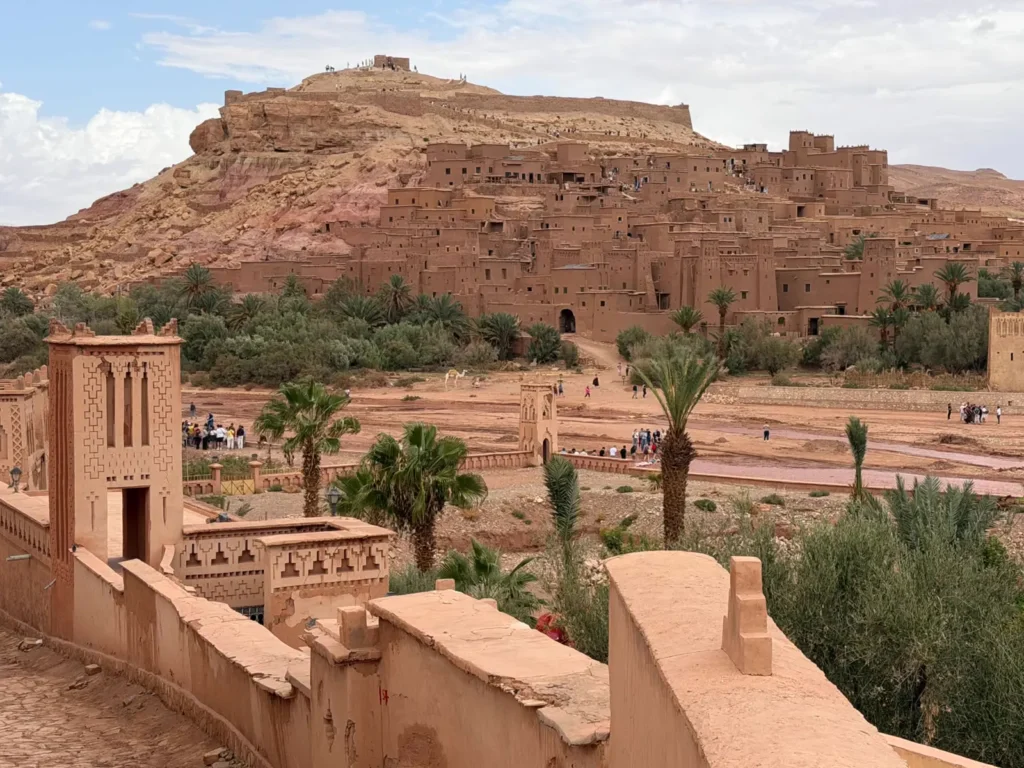
Ait Ben Haddou is the big stop of the day. Give it 1 hour 30 minutes to 2 hours. Our drivers walk up through the ksar with you and tell you its history. If you want a separate local guide, they are there, at about $30. We have lunch at Ait Ben Haddou or in Ouarzazate.
Ouarzazate has the film studios. Most Americans we drive have already seen bigger studios at home, so we usually keep the time for Ait Ben Haddou and the valleys. From Ouarzazate we continue east and reach the Dades Valley around 5 to 5:30 pm.
Why the Dades for the first night, and not Ouarzazate or Skoura? It is quiet, a village among red rocks, and after the noise of Marrakech that is what people want. The hotels we use there are good. And it puts you closer to Merzouga, so you have more time in the desert the next afternoon.
Day 2: The Todra Gorge to Merzouga
We leave the Dades around 9 am, see the Dades hairpin bends, and walk into the Todra Gorge between its high walls. Lunch is usually in Tinjdad. We stop at the cash machines in Erfoud, about 45 minutes before Merzouga, and arrive around 4 to 4:30 pm, in time for the camel ride into the dunes for sunset. Which camp to choose, and what the night costs, is in our Erg Chebbi guide, and A night in the Sahara desert shows what happens from the camel ride to the sunrise.
Day 3: Sunrise, then a different road home
After sunrise in the dunes and breakfast, we go back by the southern road: Rissani, the fossil village of Alnif, N’Kob, Agdz and the palm groves of the Draa Valley, then Ouarzazate and the Tichka again. It is a long day. Most travelers are back in Marrakech between 5:30 and 6:30 pm, depending on when we leave the desert.
How Many Days Do You Need?
| Trip | How it works | Who it suits |
|---|---|---|
| 2 days | About 8 h 30 of driving each way, a camel ride and one night at camp. Almost no time for the sights. | Young travelers with very little time who mainly want the dunes |
| 3 days | A night in the Dades Valley, a night at camp, a long drive back on day 3. | Most travelers with three days |
| 4 days | The same way out, more time in the desert, and the southern road back at an easy pace. | First-time visitors: my recommendation |
| 5 days | Adds a full day around Merzouga by 4×4 and a night in Agdz or Ouarzazate on the way back. | Anyone who wants to know the desert, not only see it |
| 3 days, ending in Fes | Marrakech, the Dades, Merzouga, then north to Fes. | Travelers continuing to Fes, Meknes or Chefchaouen |
| 3 days, flying back | Drive out over two days, then fly from Errachidia to Marrakech on day 3. | Anyone who wants to skip the long drive back |
Is two days enough?
It is possible, but it is not a trip I like to plan. You drive about 8 hours 30 minutes to Merzouga, ride a camel, sleep at camp, and drive 8 hours 30 minutes to 9 hours back the next day. You see the dunes, but you pass Ait Ben Haddou and the Todra Gorge without really stopping. I do not recommend it for families or older travelers: it is too much time in the car.
Three days or four?
Three days works. The difference with four is the third day. On a three-day trip you drive all the way back to Marrakech, with fewer stops on the return. With four days you have more time in the desert, no long drive on day 3, and time for the photo stops and villages on the southern road. If you have the time and the budget, take four. Erg Chigaga, Morocco’s other big dune sea, is also a 3-day trip from Marrakech; how Erg Chebbi and Erg Chigaga compare.
Five days, the way I would show you my home
- Day 1: Marrakech over the Atlas to Ait Ben Haddou, Ouarzazate and the Dades Valley, with the famous hairpin bends.
- Day 2: The Todra Gorge to Merzouga, a camel ride to camp, a night in the dunes.
- Day 3: The desert by 4×4: open desert, a visit to a nomad family if they welcome us, music in the village of Khamlia, and the seasonal lake people call Flamingo Lake, when there is water and the flamingos are there. Horse riding, quad bikes and sandboarding if you want them. Sunset, and a second night near Merzouga, in a hotel.
- Day 4: The souks of Rissani, Alnif and Agdz, and a night in Agdz or Ouarzazate.
- Day 5: Back to Marrakech by the Telouet road: the Glaoui kasbah at Telouet, Berber villages, and the Atlas views, before joining the Tichka road home.
Ending in Fes instead
If you also want Fes, or the north, do not drive back to Marrakech: cross the country. From Merzouga to Fes is about 460 km (285 miles), about 8 hours with our stops: a viewpoint over the Ziz Valley, lunch in Midelt, the cedar forest and Ifrane, and Fes around 6 to 6:30 pm. If your flight home leaves from Marrakech soon after the desert, the round trip is simpler. See our Marrakech to Fes desert tour.
Flying back from Errachidia
This is a good way to have three days without the long drive back. Drive out over two days as usual, and on day 3 we take you from the camp to Errachidia airport, about 1 hour 30 minutes, for the flight to Marrakech. There are only a few flights a week (in October 2026, Ryanair flew this route three times a week), so check the days before you plan around it.
Other Ways to Get to Merzouga
Is there a train to Merzouga?
No. Many people search for it, but there is no railway in the southeast. Trains take you to Marrakech or Fes, and from there you continue by road.
The bus
Supratours runs buses to Merzouga, and some of our travelers do arrive by bus. It is cheap, but it stops only two or three times, at fixed places, and much of the journey is at night, so you see nothing of the Atlas or the valleys. If you want to see the places on the way, it is not the right choice. Times change, so check the current timetable on the Supratours website.
Flying to Errachidia or Ouarzazate
The nearest airport is Errachidia, about 1 hour 30 minutes from Merzouga by road, with a few flights a week from Marrakech. Ouarzazate airport is about 5 hours to 5 hours 20 minutes from Merzouga. We pick travelers up at both. Check the flight days and fares for your dates: routes and timetables change.
Driving yourself
Yes, an American can drive this road. The main roads are in good condition. What I tell drivers:
- Watch the speed limits: they change quickly, between 60 and 80 km/h, through villages.
- Expect speed cameras, traffic police and checkpoints, and slow down for them.
- On the mountain curves, be careful of other drivers overtaking where they should not.
- Do not drive at night. I do not let our own drivers do this road at night either.
- There are fuel stations along the road, but fill up regularly and keep the tank fairly full.
A private transfer, without a tour
If you only want the car and the driver, we do private transfers from Marrakech to Merzouga without a guided tour. And if you arrive by yourself, by bus or in your own car, you can book only the desert: the camel ride, activities and a night at camp. Send us your location or we agree on a meeting point, and we take you from there. See our private drivers.
Shared Tour or Private Tour?
Online you will see shared three-day tours from Marrakech for about $100 to $170 per person. For a tight budget they get you to the dunes. But before you book one, know what to check, because these are the things I have seen:
- Group size. I have seen groups of 17, and up to 60 people or more spread over several minibuses and buses.
- A fixed schedule. Lunch and shopping stops are chosen for you, and there may be little time at Ait Ben Haddou or the Todra Gorge, or few stops for photos and toilets.
- Shared rooms. Some packages put four to six people in the same room or tent.
- A rushed last morning. The buses leave on time, so breakfast at camp can be hurried.
Not every shared tour is like this. Ask in writing how big the group is, what is included and which stops you will make, and ask for a private room and tent even if you share the transport.
What a private trip changes
The car is yours. You stop when you want: for photos, the toilet, or because you feel dizzy on the curves. You stay as long as you like at Ait Ben Haddou, you choose where to eat, or you skip lunch. Your driver speaks your language, explains what you pass, and helps you with prices if you shop. We choose well-reviewed hotels and camps at the comfort level you want.
Shopping stops
On our trips, argan oil, carpet and craft shops are your choice, never part of the plan. In my experience some bigger shops pay drivers a commission for bringing tourists. If you want to shop, we take you to small local cooperatives, many run by women, where the money stays in the village.
What a private trip costs
The price depends on how many of you there are, the vehicle, the level of hotel and camp, and the season (summer is quieter and often cheaper). As a guide, with standard hotels, a private three-day trip from Marrakech costs about $415 per person for two travelers and about $250 per person for a group of five: the car and driver are shared, so the more you are, the less each person pays. Prices checked in October 2026; we send an exact quote within 24 hours.
That price includes the air-conditioned vehicle with all its costs, your driver (English-speaking, or another language on request), the hotels or riads, the night at a desert camp, breakfasts and dinners, the camel ride, sandboarding and Berber music at camp, and stops whenever you want. Lunches, drinks, entrance fees, optional activities and tips are extra. See what sets the price of a Morocco trip.
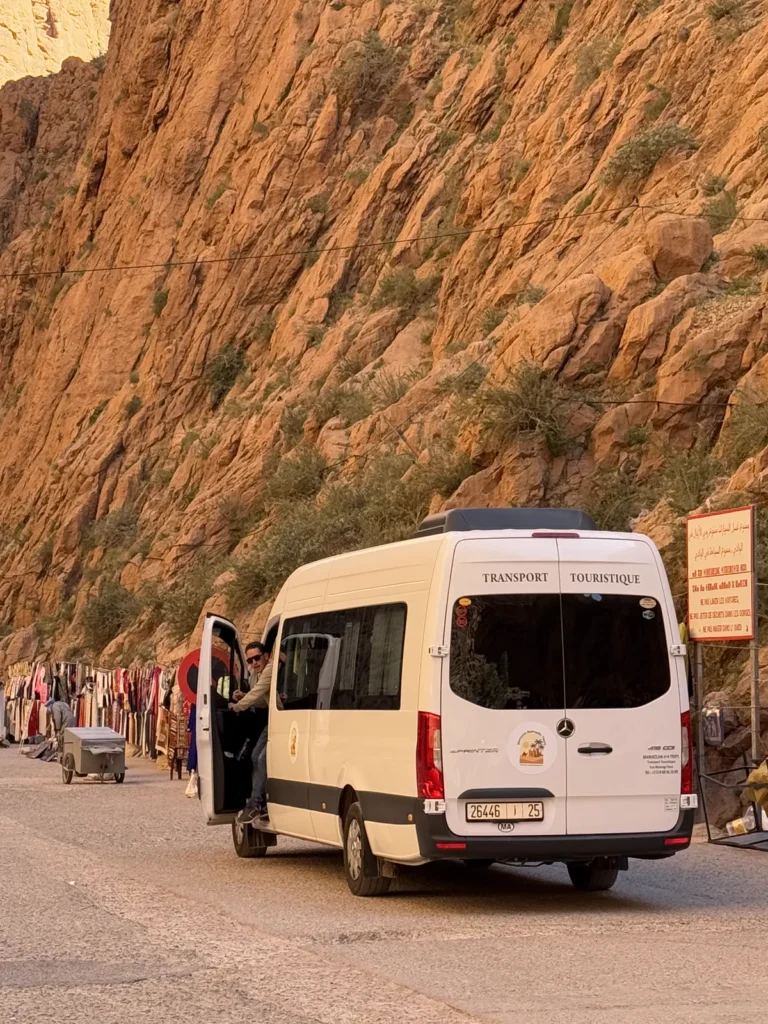
Snow on the Tizi n’Tichka, and a Night in a Berber Village
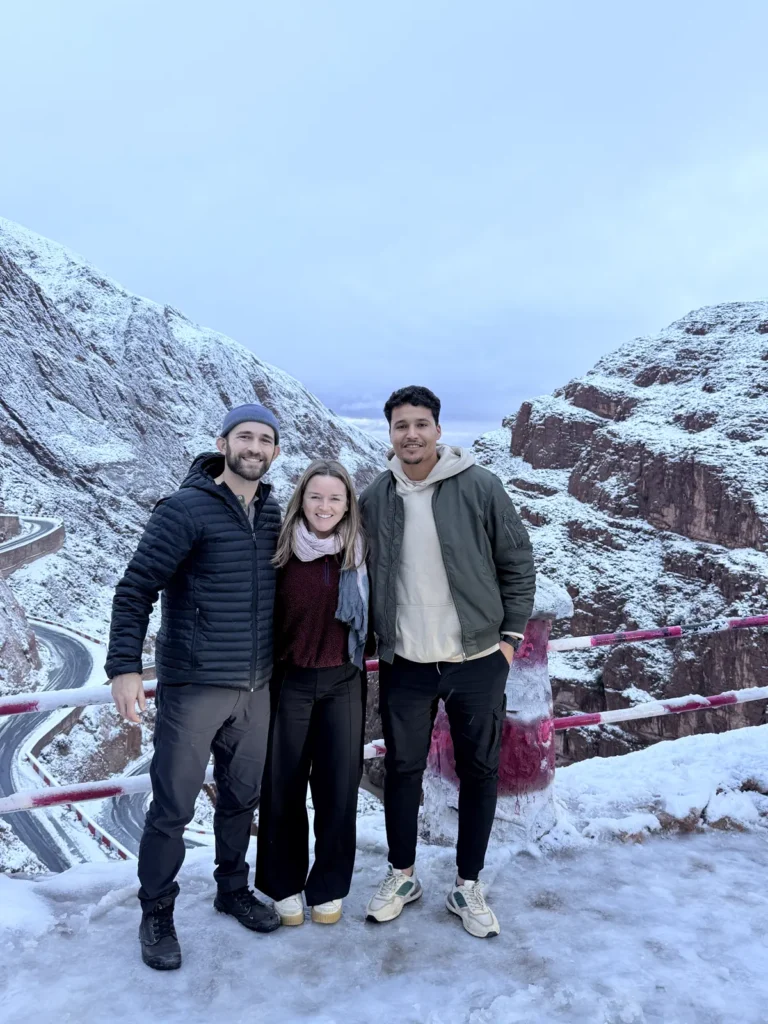
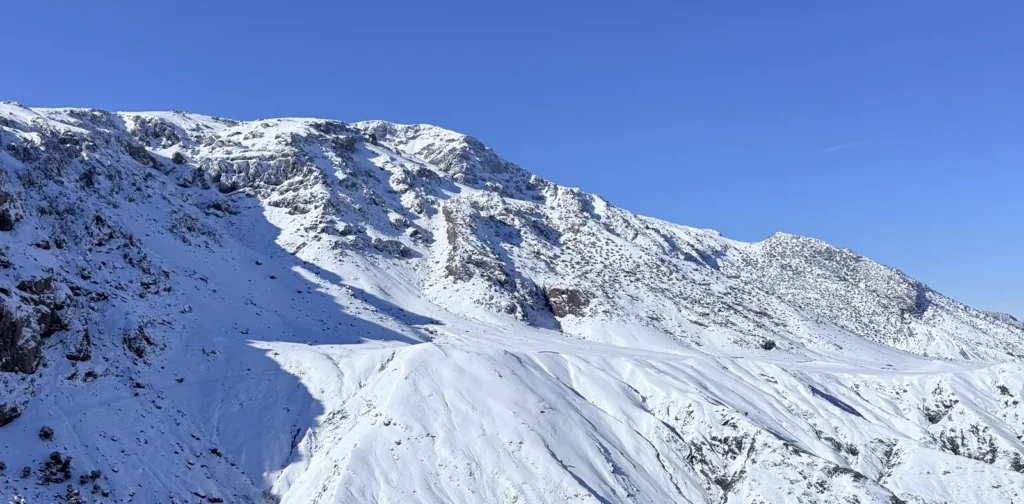
The pass is the one part of this road that can stop you. Snow comes mostly in late November and early December, sometimes in January and February, and once in a while even in October. Occasionally the road closes for a day or two.
When that happens, we have choices. We can wait a night in Ouarzazate and cross the next day, change the order of the trip, or take the long way round by Agadir. None of them is perfect, but there is always a plan.
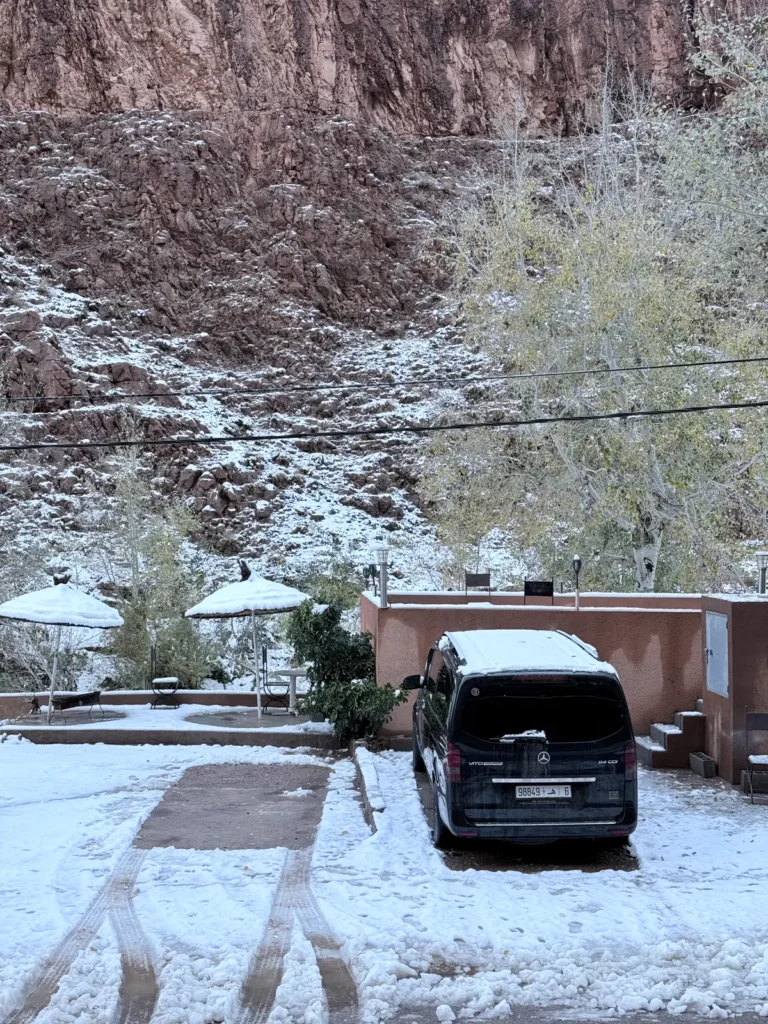
One winter, the snow caught us on the Tichka with a group of Americans. We could not go on, and we could not get back to Ouarzazate. So we parked and asked at a Berber village nearby. A family took us in, gave us food and water, and looked after all of us for the night until the road opened the next morning. At the end of their twelve days in Morocco, that night was what they said they remembered most. When they got home to the United States, they sent money and gifts to the family.
Practical Tips for the Drive
Luggage
For the camel ride you take only water, your phone or camera and a small backpack. Your suitcases go to the camp separately, by 4×4, usually a Toyota Hilux, and they are waiting for you when you arrive.
What to wear
In winter, wear warm clothes and boots, and keep an extra jacket in the car, not in the trunk: on the Tichka it can be 0 °C (32 °F), and down to about −4 °C (25 °F) when it snows. A winter night at camp can be 0 to −3 °C (32 to 27 °F), so ask for a heated tent when you book. In summer, loose, light clothes for the car and the camel.
Car sickness and children
The road over the Atlas has many curves. If you get car sick, take what usually works for you, look ahead at the road rather than at your phone, and ask for extra stops: the driver will slow down and drive more gently. We can arrange child seats for small children.
Food
Lunch on day 1 is at Ait Ben Haddou or in Ouarzazate, on day 2 in Tinjdad. A three-course lunch costs about $10 to $15 per person. Vegetarian food is easy to find on this road; tell us about allergies or gluten when you book, and check with the restaurant.
Cash and phone signal
The last cash machines we stop at are in Erfoud, about 45 minutes before Merzouga. Your phone works on most of the road, with short gaps in the mountains, and some desert camps have Wi-Fi.
Tipping
Tips are your choice, though they are often expected. As a guide, for a couple over a three-day trip: about $100 for the driver, $10 to $20 for the camel leader and $20 to $30 for the camp team, in total, not per day. Larger groups usually give more in total.
Safety
I have driven solo women and families on this road many times, and it is safe. The one thing to watch is pushy souvenir sellers at some roadside stops.
The Best Time of Year for This Drive
My favorite times are late August to mid-December and mid-January to late June.
- Summer: very hot. I have seen 39 to 42 °C (102 to 108 °F) around Ouarzazate and Errachidia. The camel rides move to sunset and sunrise.
- Winter: snow on the Tichka can slow the traffic, cut the stops short or change the route, mostly in late November and early December.
- Spring: the roses of the Kelaat M’Gouna valley, between Ouarzazate and the Dades, usually flower from mid to late April, and the rose festival is in early May.
For the rest of the country, see the best time to visit Morocco.
What Most Websites Get Wrong
Some websites make this road sound dangerous, or say you should never drive it yourself. I disagree. I sell private trips, and I still tell people the truth: a careful driver can do this road safely in a rental car, in daylight.
The real choice is not about safety. It is about how you want to spend the days. Driving yourself, you watch the road. With a driver, you watch the Atlas, the kasbahs and the valleys, and you arrive at the dunes rested. And if you have less than three days, look closer to Marrakech: read Agafay or the Sahara.
Desert Trips from Marrakech
Every trip is private and can be changed: an extra night, the southern road, a finish in Fes, or a flight back from Errachidia.
-
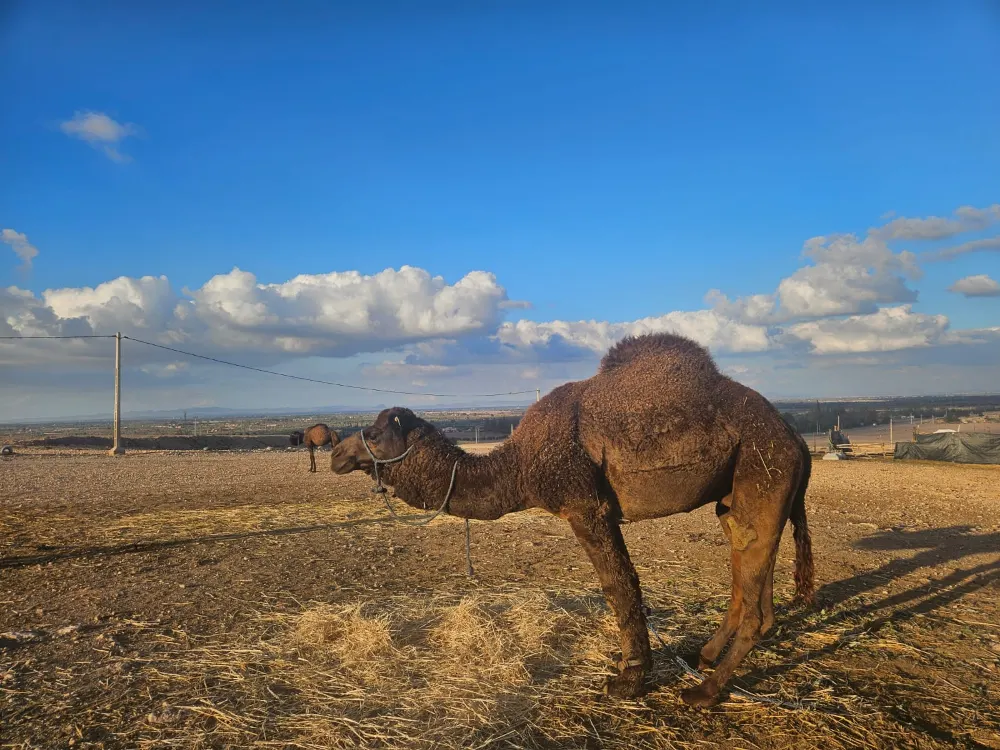 3 days
3-Day Marrakech to Merzouga Desert Tour
Over the High Atlas to the dunes of Erg Chebbi and back: our most requested desert trip from Marrakech.Private tour · Price on request -
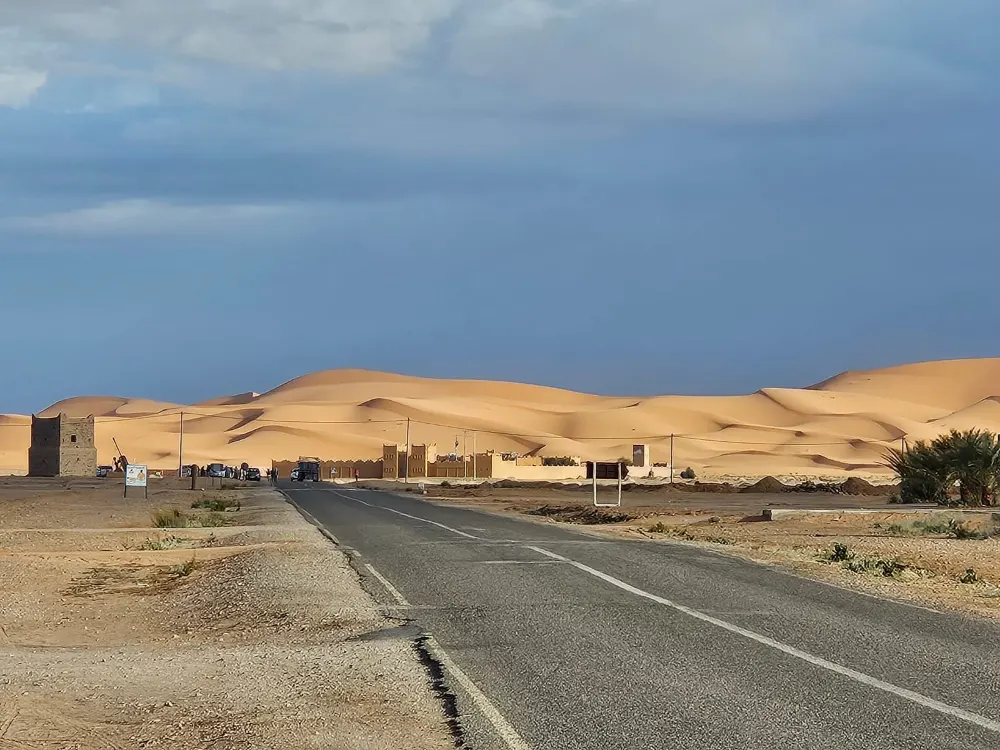 4 days
4-Day Sahara Desert Tour from Marrakech
Merzouga and Erg Chebbi from Marrakech with the drive split into four easy days and a night in Ouarzazate on the way back.Private tour · Price on request -
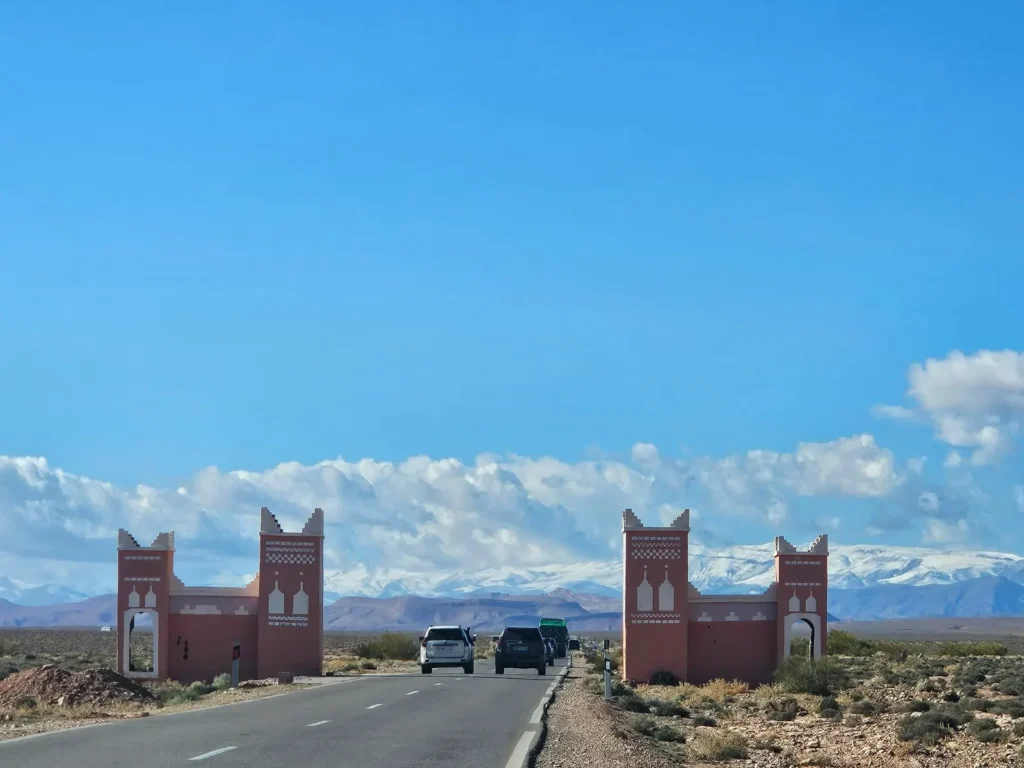 3 days
3-Day Marrakech to Fes Desert Tour
The desert on the way between two cities: over the Atlas to the Merzouga dunes, then north to Fes.Private tour · Price on request -
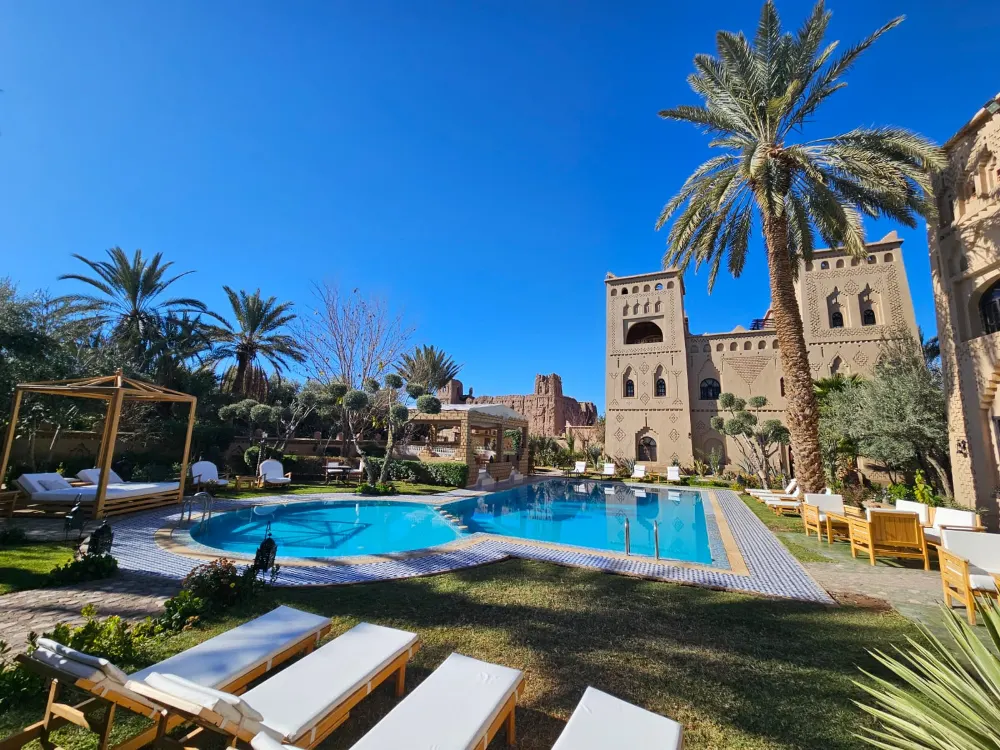 5 days
Luxury Sahara Desert Tour from Marrakech
A private 4×4, boutique kasbah hotels and two nights in a luxury tent in the Erg Chebbi dunes.Private tour · Price on request
Marrakech to Merzouga: Questions
Still deciding? Ask us on WhatsApp: we reply from Merzouga, usually the same day.
How do I get from Marrakech to Merzouga?
By road, over the Tizi n’Tichka pass: on a private or shared tour, with a private driver, in a rental car or by Supratours bus. You can also fly from Marrakech to Errachidia, a few times a week, and continue about 1 hour 30 minutes by road. There is no train.
How far is Marrakech from the Sahara?
The Erg Chebbi dunes at Merzouga are about 550 km (340 miles) from Marrakech: about 8 hours 30 minutes of driving, or 10 hours 30 minutes to 11 hours with normal stops.
Is there a 2-day tour from Marrakech to Merzouga?
Yes, but it means about 8 hours 30 minutes of driving each day and almost no time for the sights on the way. I recommend at least three days, and four if you can.
Is there a 3-day tour from Marrakech to Merzouga?
Yes, it is the most popular way to go: a night in the Dades Valley, a night at a camp in the Erg Chebbi dunes, and back to Marrakech on day 3. It can also end in Fes.
Can I visit the Sahara on a day trip from Marrakech?
No. Merzouga is too far for a day. For a desert landscape in one afternoon, go to Agafay, about 40 minutes from Marrakech; it is rocky, with no sand dunes.
Is Merzouga worth the long drive?
If you want the tall golden dunes most people picture when they think of the Sahara, yes. And with time to stop, the road itself is part of the trip: the Atlas, Ait Ben Haddou, the Dades Valley and the Todra Gorge.
Plan Your Road to the Dunes
Tell us your dates, how many you are, and where your flight leaves from. We reply within 24 hours with a route and a price.